




Why MRZ Codes Matter in Identity Verification Today
A Machine Readable Zone (MRZ) is a dedicated area on documents like passports, national IDs, or driving licenses, designed for quick and secure machine-based data extraction. It enables faster identity checks and improves accuracy during processes like travel security, online account verification, and age restriction compliance.
This guide explains what MRZ codes are, how they work, and why they’re now vital across industries—not just airports.
What Is an MRZ Code?
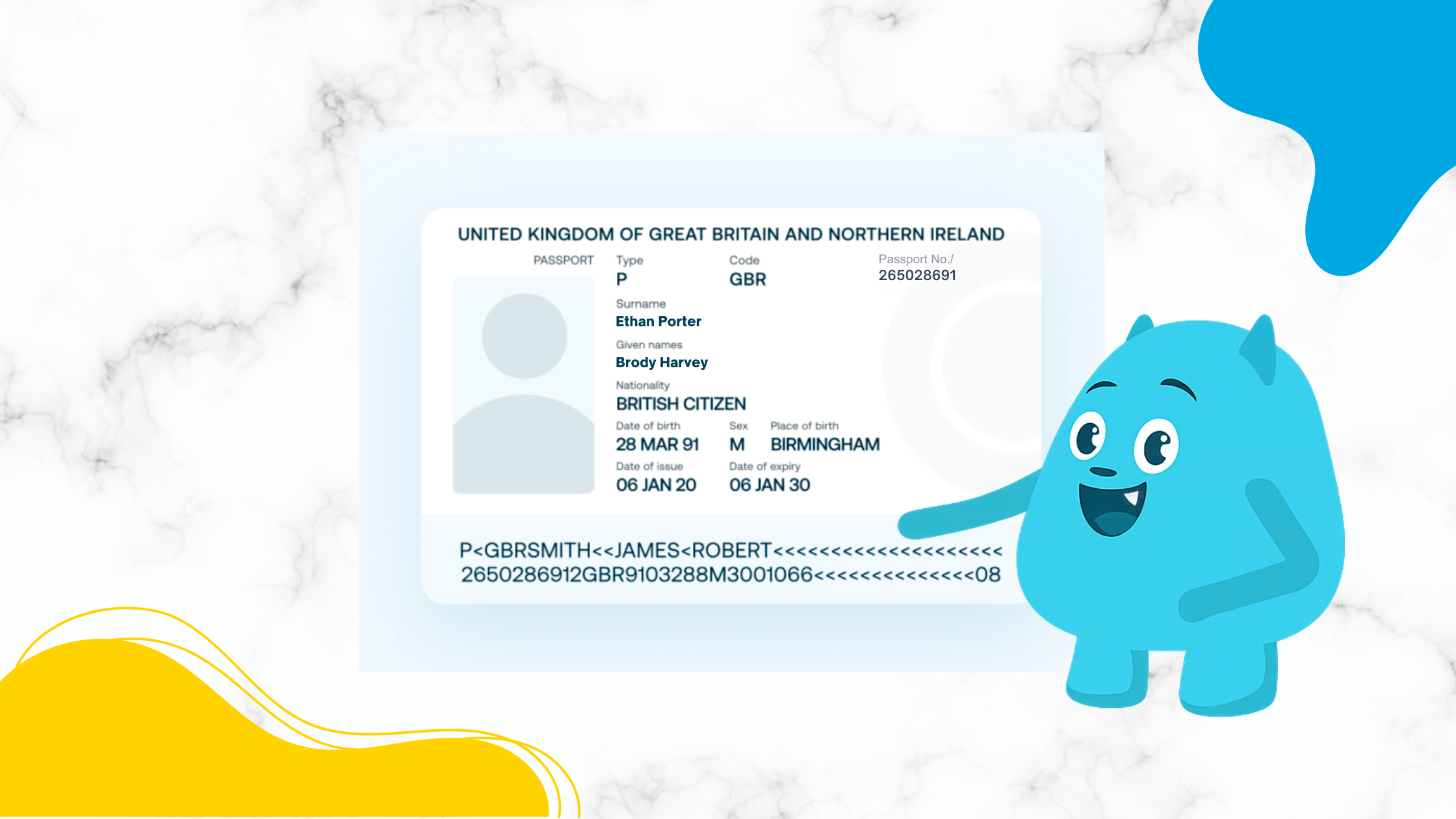
MRZ stands for Machine Readable Zone, which appears at the bottom of most official identity documents. It contains lines of standardized characters—letters, numbers, and special symbols—that encode key personal information in a way that can be quickly scanned by machines.
This format makes it possible to validate identities in a matter of seconds and was originally developed for faster passport control.
Over time, the use of MRZ codes has expanded well beyond aviation, now playing a role in digital onboarding, financial compliance, and fraud prevention.
A Quick History of MRZ Development
The idea behind MRZ started in 1968 when the International Civil Aviation Organization (ICAO) aimed to make passenger processing faster and more secure. By 1980, the first standards for MRZs were published, leading to global adoption. The UK introduced MRZ passports in 1988, and non-MRZ passports were officially phased out after 2015.
This consistency allows MRZ codes to be reliably used and read anywhere in the world.
What’s Inside an MRZ Code?
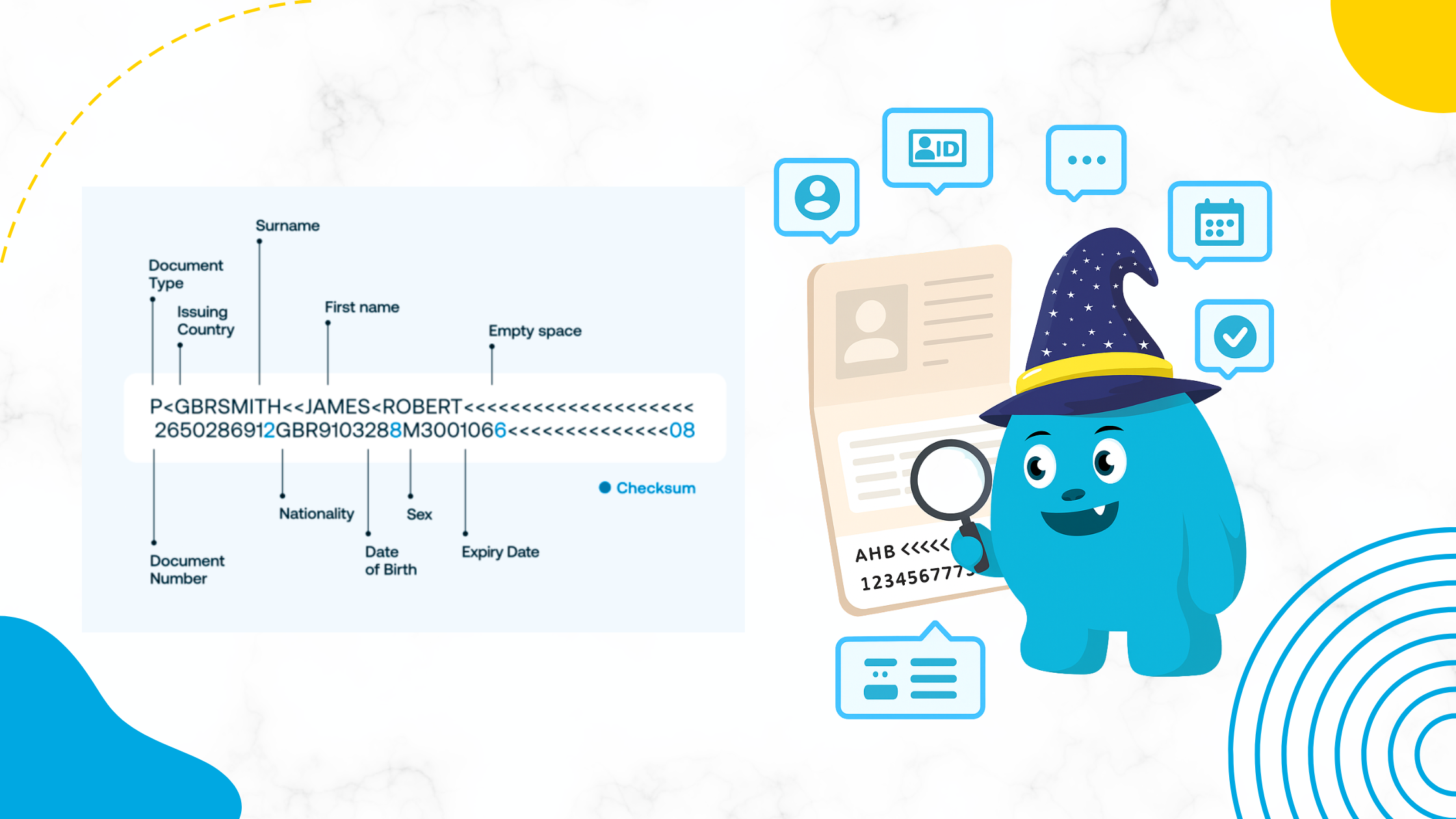
An MRZ code holds key information including:
-
Full name of the document holder
-
Document number
-
Nationality
-
Date of birth
-
Gender
-
Expiry date of the document
-
Country of issue
-
Check digits for validation
These characters are separated by the “<” symbol and formatted to allow fast scanning. The data is structured in a way that machines can instantly extract and validate it for accuracy.
MRZ Code Formats
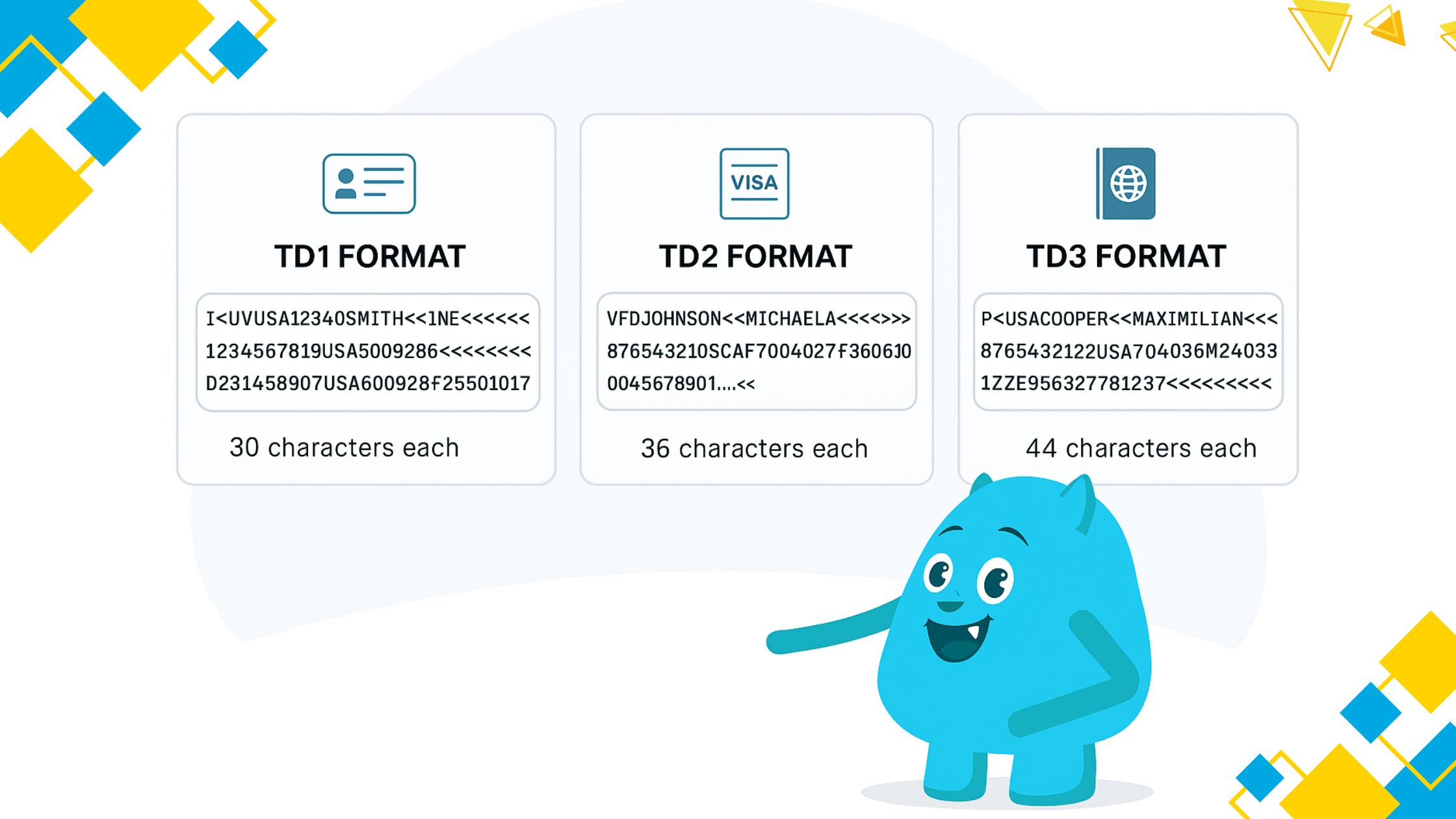
According to ICAO Document 9303, there are three main MRZ code formats depending on the size and type of the document:
-
Type 1: Found on ID cards or driver’s licenses. Three lines of 30 characters each
-
Type 2: Less common. Two lines of 36 characters
-
Type 3: Most common in passports. Two lines of 44 characters
This standardization ensures that MRZ codes work universally, regardless of country or issuing authority.
How MRZ Codes Are Read by Machines
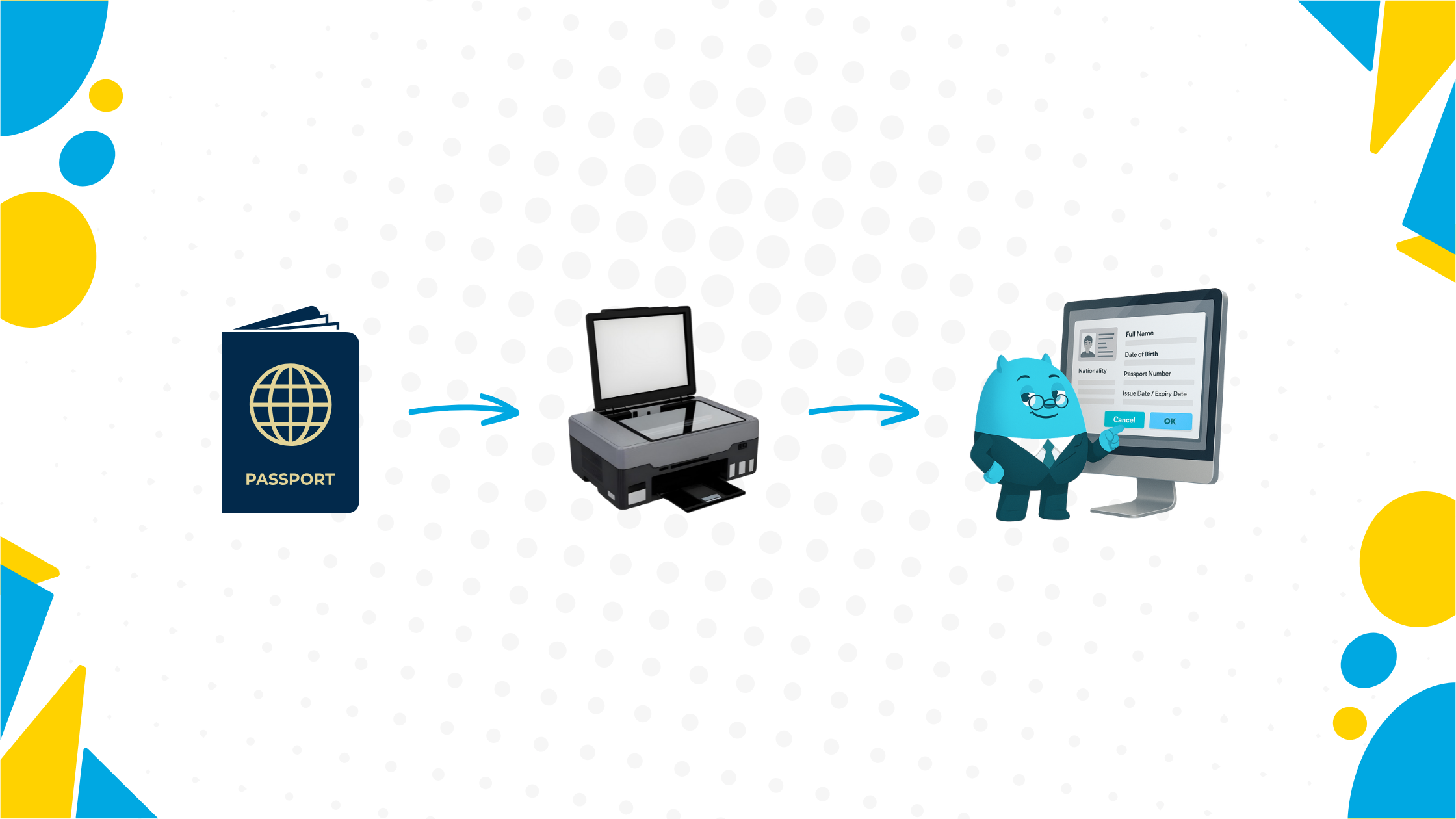
Reading an MRZ code involves three simple steps:
-
Scanning: The machine captures the MRZ using a camera or scanner
-
Extraction: The structured text format enables the machine to extract data like name, DOB, and document number
-
Validation: The system checks the encoded values using check digits to verify authenticity and detect tampering
This process takes milliseconds and reduces the need for manual data entry or extended checks.

MRZ in Identity Verification
MRZ plays a central role in fast identity verification, especially in environments where speed and compliance are crucial.
-
It allows for instant user onboarding
-
It supports age checks in regulated industries
-
It simplifies airport and border controls
-
It helps verify users in digital environments such as banking, telecom, or healthcare
Since MRZ codes contain check digits and structured fields, even minor inconsistencies (like typos or font changes) are enough to flag potential forgery.
MRZ in AML and KYC Compliance
MRZ data is now widely used in:
-
AML (Anti-Money Laundering) checks
-
KYC (Know Your Customer) onboarding
-
Sanction list screening
-
Fraud detection systems
When an MRZ is scanned, its data is cross-referenced against databases of sanctioned or high-risk individuals. If anything is off—either in the checksum or layout—it gets flagged.
Thanks to smartphone cameras and online tools, this process can now happen remotely, making compliance simpler while still highly secure.

Where MRZ Verification Is Used
MRZ-based document checks are now integrated into:
-
Customer onboarding for financial services
-
Entry validation at airports and borders
-
User identity checks for online services
-
Age-restricted platforms (e.g., gambling or alcohol delivery)
-
Crypto and fintech onboarding platforms
-
SIM registration in telecom sectors
Whether in person or online, MRZ scanning speeds up verification and reduces the chance of fraud or human error.
Final Thoughts
MRZ codes were originally designed for speeding up passport control—but today, they’re doing much more. By embedding vital identity data in a standard, machine-readable format, MRZ makes verification fast, secure, and universally accessible.
As businesses and governments prioritize security and compliance, MRZ will continue to be a powerful tool across industries worldwide.